
Airtable-Driven Messaging Built Into Your Platform
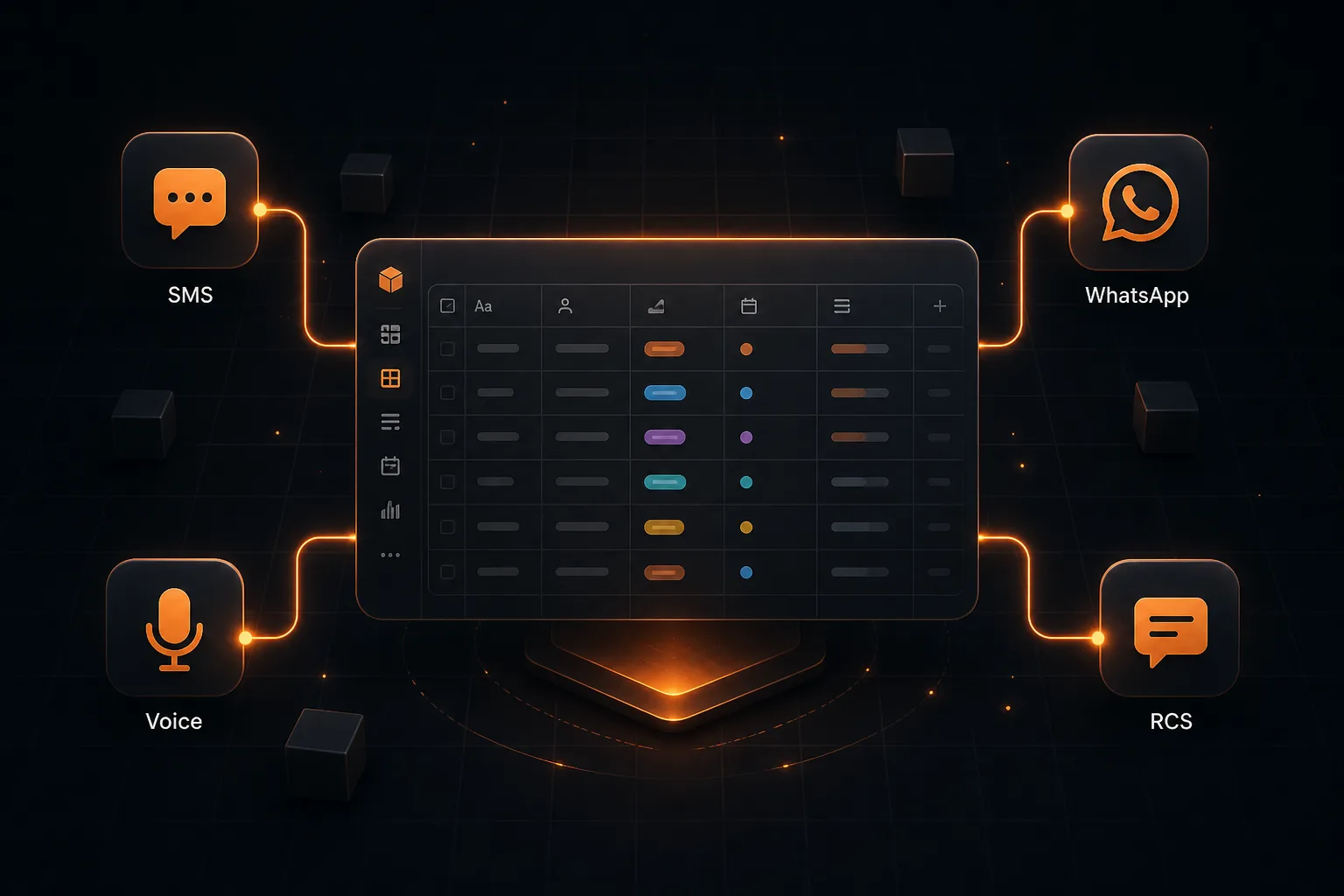
Your customers already plan campaigns, ops, and support in Airtable. The Airtable Connector Plugin lets licensed and rented SMPP Center operators offer table-triggered messaging: connect Airtable once, pick a base and table under Table Connections, and send SMS, WhatsApp templates, Voice calls, or RCS when a new record is created. Delivery status writes back to a mapped field. Incoming SMS, WhatsApp, and RCS replies can become new rows in a new or existing table. No Zapier. No custom scripts to maintain.
SMS WhatsApp Voice RCS
Get a QuoteWhat Your Users Can Automate, Per Table Connection
Each connected Airtable base and table gets its own independent mix of outbound and inbound automations.
Send on New Record
Trigger SMS, WhatsApp templates, Voice calls, or RCS the moment a new record is added to a connected table that has a mapped mobile field.
Log Replies as New Rows
Inbound SMS, WhatsApp, and RCS replies can be inserted as new rows in a new table or an existing table linked to your Table Connections, with channel, text, and timestamp.
Personalize From Fields
Use Airtable field names as placeholders in SMS, or map WhatsApp and RCS template variables to table fields through a visual mapping UI.
Delivery Status on Record
After every send, delivery status (SENT, DELIVERED, FAILED, ANSWERED) can be written into the status field you mapped on that table connection.
Which Airtable Bases and Tables Can You Connect?
Users connect any base they can access via OAuth, then pick a table that holds the mobile number used for messaging. Multiple Table Connections let different workflows run side by side without sharing cursors or channel settings.
Bases
Connect the Airtable bases your teams already use for leads, orders, support tickets, or campaign lists. One OAuth account can expose multiple bases.
Tables
Each Table Connection maps one table, a mobile field, and an optional status field. Outbound and inbound automations are configured per connection.
Inbound Reply Tables
Route incoming SMS, WhatsApp, and RCS into a new table created for replies, or into an existing table already listed under Table Connections.
Independent Controls
Pause, reconfigure, or delete one table connection without disrupting other bases or channels running on the same account.
Tables without a usable mobile field cannot trigger outbound messaging until a phone-type or text field is mapped. Inbound reply targets can be a dedicated new table or an existing connected table.
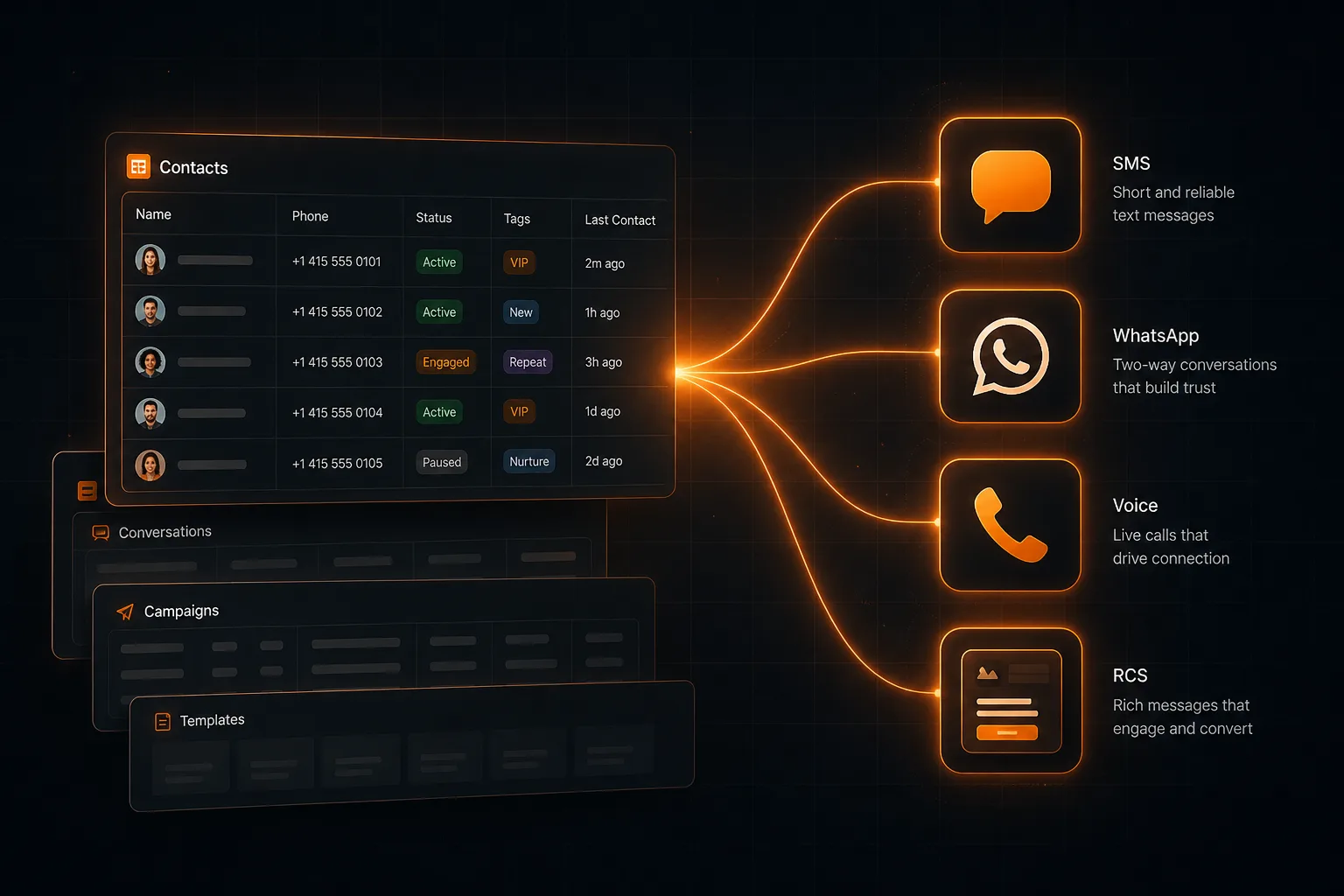
Channel Capabilities at a Glance
| Capability | What Happens |
|---|---|
| Send SMS on new record | Messages the mapped mobile using Sender ID, optional DLT template, and freeform text with Airtable field placeholders. |
| Send WhatsApp on new record | Sends an approved WhatsApp template. Header, body, media, and button variables map to Airtable fields or fixed values. |
| Send Voice call on new record | Places a call and plays an approved audio clip from the voice library, with optional status field write-back. |
| Send RCS on new record | Sends an approved RCS template from a verified bot, with per-variable Airtable field mapping. |
| Log incoming SMS / WhatsApp / RCS | Adds inbound replies as new rows in a new table or an existing table under Table Connections, with channel, message text, and timestamp. |
| Delivery status field write-back | SENT, DELIVERED, FAILED, ANSWERED, PENDING, or UNDELIVERED written into the mapped status field after every send. |
| Recent Activity | Shows table, mobile, channel badge, transaction ID, delivery status, and timestamp so operators can confirm automations are running. |
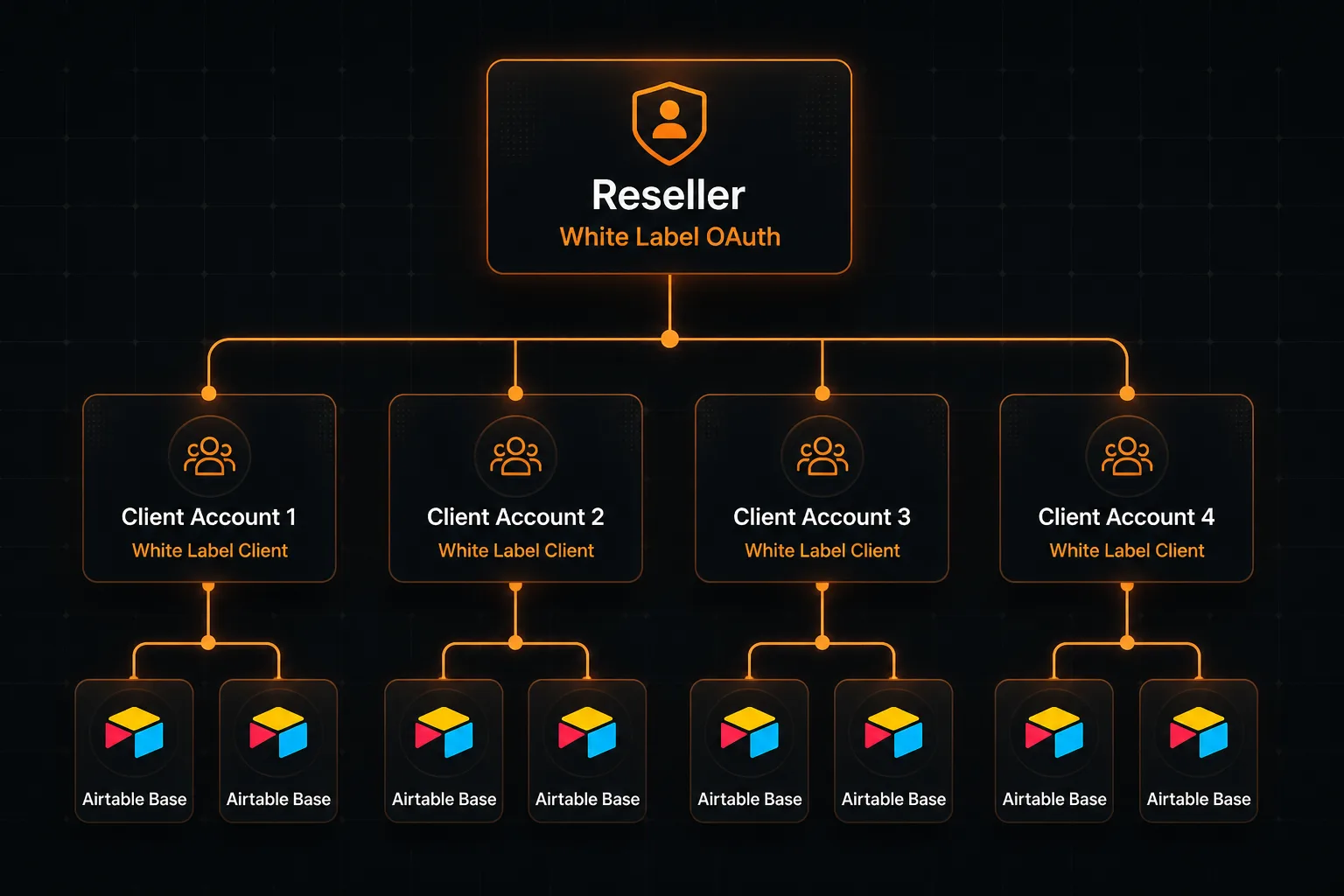
How Resellers Set Up Airtable for Downline Clients
Resellers own the Airtable OAuth credentials and channel permissions. Downline clients never need to create their own Airtable developer app to start automating.
OAuth in White Label
- Create an Airtable OAuth integration and note the Client ID and Client Secret.
- Save those credentials under White Label for the Airtable Integration section.
- Once configured, downline users can complete Airtable OAuth from the panel.
Per-Account Channel Flags
- Enable or disable Send SMS, Send WhatsApp, Send Voice, and Send RCS per customer account.
- Enable or disable Log Incoming SMS, Incoming WhatsApp, and Incoming RCS independently.
- Customers only see the automation cards for channels you have provisioned.
Downline Client Integration
- Clients connect their Airtable account with one OAuth consent.
- They add Table Connections (base + table), map the mobile field, and optionally a status field.
- If OAuth is not configured, users see a clear contact-your-representative message instead of a broken flow.
Reseller Visibility
- Recent Activity shows table, mobile, channel, transaction ID, delivery status, and timestamp.
- Usage follows the same delivery reports and credit ledger as other channels.
- No separate Airtable reporting stack to maintain.
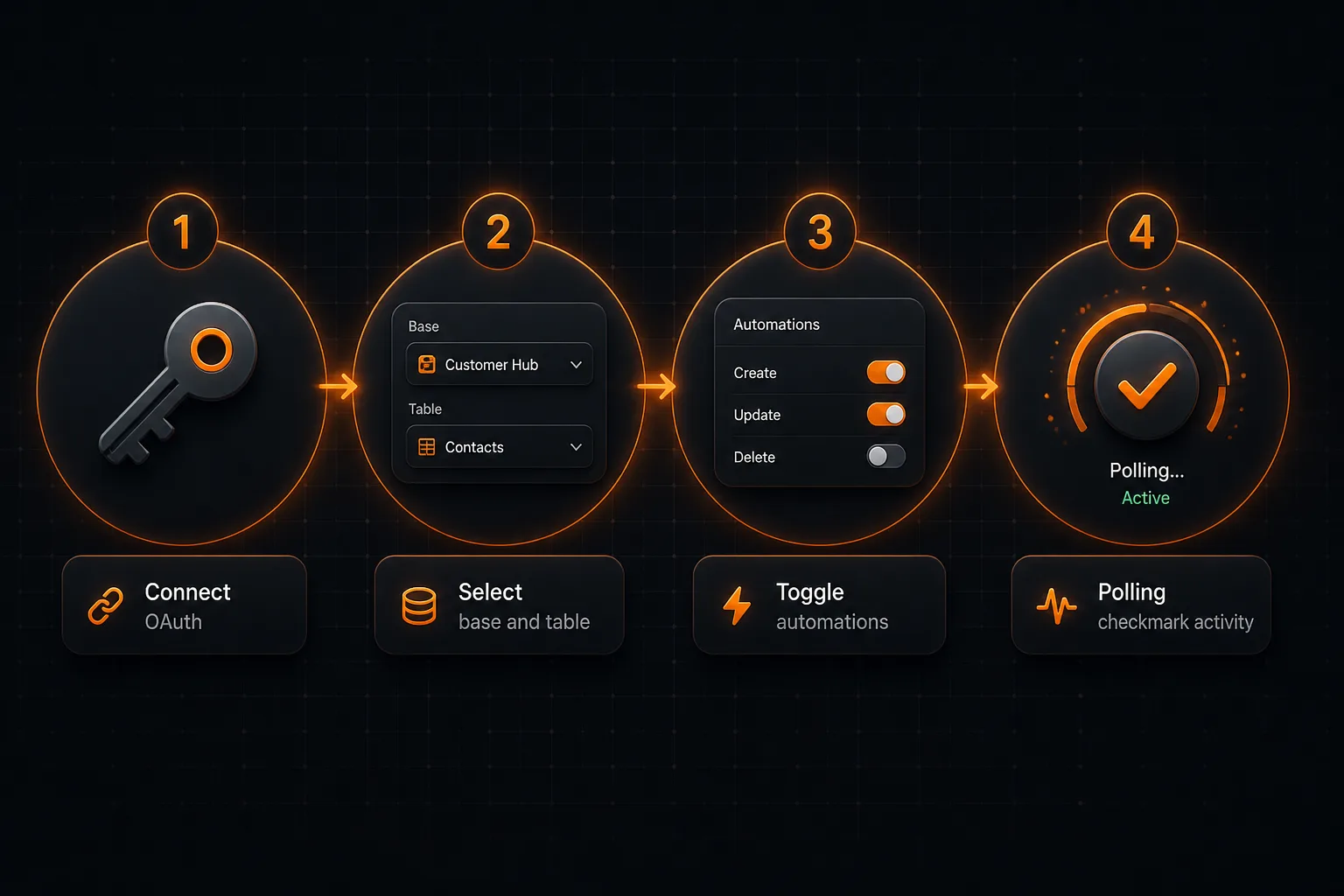
How End Users Set Up Alerts in Four Steps
Once the reseller has enabled OAuth and channels, typical setup takes a few minutes.
Connect Airtable
One-time OAuth from Connected Services. The panel shows the connected Airtable identity, with Disconnect available once all table connections are removed.
Connect a Table
Choose a base and table under Table Connections, select which field holds the mobile number, and optionally map a delivery status field.
Turn On Automations
Flip outbound send and inbound logging toggles for SMS, WhatsApp, Voice, and RCS. Each toggle expands to configure templates, sender IDs, and variable mapping.
It Runs Automatically
New records and replies are picked up on a short polling cycle, about once a minute. Choose a new or existing table for inbound rows, then confirm sends in Recent Activity.
Send Alerts the Moment a Record is Created
Four outbound channels, each independently toggled per Table Connection for SMS, WhatsApp, Voice, and RCS alerts.
SMS
- Choose a registered Sender ID for the account.
- Write a free-text message using Airtable field placeholders from the connected table.
- Optionally attach a pre-approved DLT template for Indian traffic.
- Delivery status written back to the mapped status field automatically.
- Select from approved WhatsApp templates on the account.
- Map header, body, media, and button variables to Airtable fields or fixed values.
- Supports text headers, image/video/document media headers, and URL buttons with dynamic suffixes.
- Delivery status and replies stay tied to your Table Connections.
Voice
- Select an approved audio clip from the voice library.
- Places an outbound call and plays the clip when the recipient answers.
- Call status (ANSWERED, NO ANSWER, FAILED) can update the mapped status field.
- Works on any mobile number in the mapped Airtable field.
RCS
- Select a verified RCS bot and an approved RCS template.
- Map each template variable to an Airtable field or a fixed value.
- Supports rich cards, carousels, and action buttons.
- Inbound RCS replies can be logged as new rows in your reply table.
Log Every Reply Back into Airtable
Three inbound channels, each independently toggled. Replies are added as new rows in a new table or an existing table under Table Connections.
Incoming SMS
Inbound SMS messages are captured as new Airtable rows with channel, mobile number, message text, and timestamp. Point them at a dedicated replies table or an existing table already listed in Table Connections.
Incoming WhatsApp
WhatsApp replies from contact numbers are inserted as new rows so sales and support keep the conversation trail inside Airtable, without leaving the panel for a separate inbox.
Incoming RCS
Inbound RCS messages and button responses are logged as new rows in the chosen new or existing table, giving teams full reply visibility next to the same base that triggered outbound alerts.
Want this plugin on your SMPP Center license or rental?
We will walk through enablement, Airtable OAuth, per-account channel permissions, and how your downline clients connect bases and tables.
Talk to a SpecialistWhy Licensed Customers Choose Airtable-Triggered Messaging
No Middleware Tax
- No Zapier, Make, or custom scripting required for the create-to-message path.
- No separate webhook host to maintain for standard outbound and inbound flows.
- Works with Airtable accounts that allow OAuth for your reseller app.
Multi-Table Flexibility
- Connect multiple bases and tables under Table Connections as workflows grow.
- Each table keeps its own independent automation mix.
- Pause, configure, or remove connections without disrupting other tables.
Compliant Messaging Path
- Uses the same DLT, sender ID, and approval workflows already on the platform.
- WhatsApp templates and RCS bots follow the same approval process as manual sends.
- No parallel messaging stack to audit.
Before You Enable the Plugin
Platform checklist
- Active SMPP Center license or rental with the Airtable Connector enabled
- Credits or post-paid capacity for the channels you open
- Airtable Client ID and Client Secret configured in White Label
Airtable readiness
- Active Airtable account with OAuth consent allowed for the reseller integration
- Bases and tables with a mobile field for the workflows you plan to connect
- Optional status field ready for delivery write-back, plus a target table for inbound reply rows
Per-channel readiness
- DLT Sender ID and Entity ID for SMS
- Approved WhatsApp templates for WhatsApp sends
- Approved audio clips in the voice library for Voice calls
- Verified RCS bot and approved RCS templates
FAQ
Frequently Asked Questions
Ready to connect Airtable to your messaging stack?
Chat with usClient Feedback
What Our Clients Say
Our clients run regulated, high-volume messaging infrastructure and prefer not to be named publicly. These testimonials are shared with permission while keeping commercially sensitive details confidential.
API integration was straightforward and the support team assisted us throughout deployment. We now manage multiple operator connections from a single platform.
The migration was completed smoothly and the platform has remained stable under heavy production traffic. The flexibility of self-hosting was one of the biggest advantages for us.
The platform has been reliable for business-critical messaging. Multi-connection support and detailed logging have made daily operations much easier.
Excellent documentation, responsive technical support, and an enterprise-grade platform that scales as our business grows.
Names and company details are withheld at our clients' request. This is common among telecom providers, SMS aggregators, fintech companies, and enterprises that consider their messaging infrastructure commercially sensitive.